
WAEC Agriculture Practical Answers 2026
Number 1
(1a)
(i)Type of feed given to the poultry
(ii)Age/health status of the poultry
(iii)Method of storage/handling after collection
(iv)Moisture content (wet or dry droppings)
(1b)
(i)Water dissolves limestone through chemical weathering (carbonation)
(ii)Water causes physical breakdown by freeze-thaw action (frost action)
(iii)Rainwater carrying carbonic acid reacts with limestone, breaking it down
(iv)Flowing water causes abrasion/mechanical erosion of limestone surfaces
(1c)
(i)It is a medium for dissolving and transporting mineral nutrients to plant roots
(ii)It is essential for photosynthesis in green plants
(iii)It helps maintain turgidity/cell pressure in plant tissues
(iv)It regulates plant temperature through transpiration
(1d)
(i)Plant roots (roots penetrate cracks and break limestone apart)
(ii)Lichens and mosses (secrete acids that dissolve limestone)
(iii)Burrowing animals/earthworms (physical breakdown through burrowing activity)
Number 2
(2a)
E (Dibber):
(i)Used for making holes in the soil for transplanting seedlings or planting seeds
G (Weighing scale):
(i)Used for weighing farm produce, feeds, and fertilizers
H (Watering can):
(i)Used for watering seedlings/young plants in nurseries and gardens
(2b)
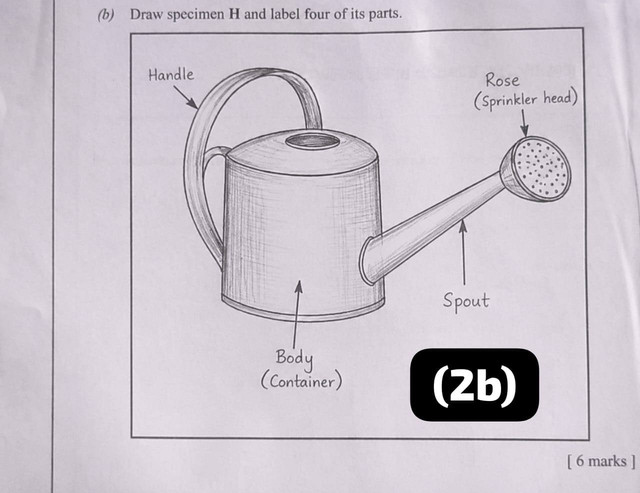
(2c)
E (Dibber) similar tools:
(i)Pointed stick/crowbar
(ii)Hand trowel
H (Watering can) similar tools:
(i)Hosepipe/water hose
(ii)Irrigation sprinkler
(2d)
(i)Zero/balance the scale before use to ensure accurate readings
(ii)Do not exceed the maximum weight capacity of the scale
Number 3
(3a)
J (Pineapple): A multiple/compound fruit (syncarp); monocotyledonous plant fruit.
K (Cassava tuber):A modified storage root (tuberous root)
L (Cotton lint with seeds): A dehiscent capsule fruit with attached seed fibres
(3b)
(i)Suckers (side shoots from base of plant)
(ii)Slips (shoots from the base of the fruit)
(iii)Crowns (leafy top of the fruit)
(3c)
J (Pineapple):
(i)Used as food/eaten fresh as fruit
(ii)Used in processing juice and canned products
(iii)Used in livestock feed (pineapple waste)
K (Cassava tuber):
(i)Used as human food (boiled, fried, made into garri/fufu)
(ii)Used in starch/flour production for industry
(iii)Used as animal feed
L (Cotton lint with seeds):
(i)Cotton lint is used in textile/cloth production
(ii)Cotton seeds are processed into cotton seed oil for cooking
(iii)Cotton seed cake (residue after oil extraction) is used as livestock feed
Number 4
(4ai)
Protein
(4aii)
(i)Soybean meal
(ii)Cotton seed cake
(iii)Palm kernel cake
(4b)
N (Fish meal):
(i)Very high crude protein content (60–72%)
(ii)Rich in essential amino acids (lysine, methionine)
(iii)Good source of calcium and phosphorus for bone development
P (Guinea grass):
(i)1. Moderate crude protein content (7–12% when fresh)
(ii)Good source of carbohydrates/energy for ruminants
(iii)Contains minerals and vitamins that support animal health
(4c)
(i)Cattle
(ii)Goats
(iii)Sheep
(4d)
(i)Hay-making; cutting and sun-drying the grass to reduce moisture content
(ii)Silage-making; fermenting the grass under anaerobic conditions for preservation
COMPLETED!!!